
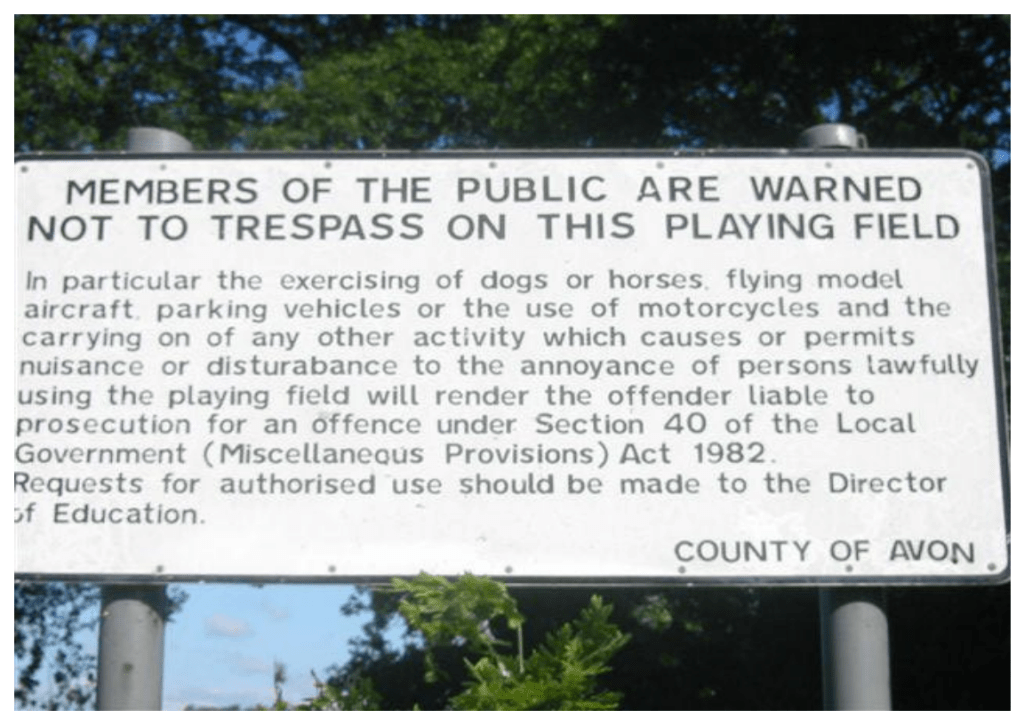
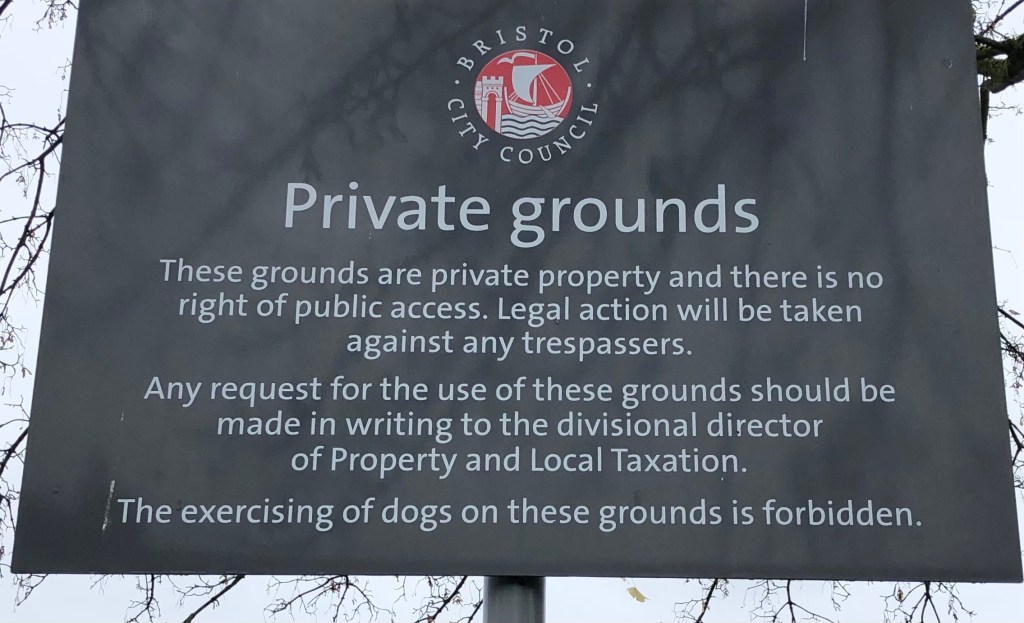
After years of argument, the one thing that the decision on the Stoke Lodge TVG applications is likely to come down to today is the signs – two signs put up by Avon County Council in the mid-1980s. Here’s why the Inspector’s conclusion on the signs is wrong:
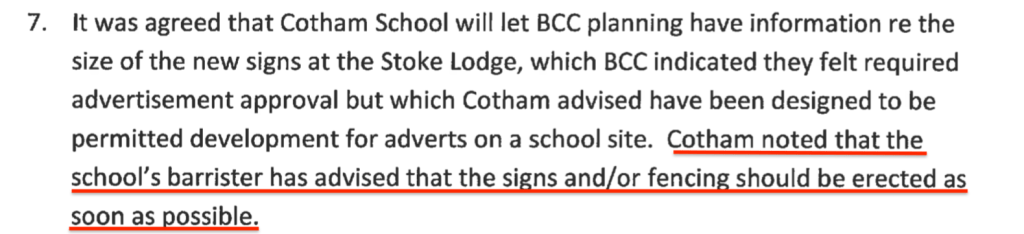
First, he said in TVG1 that they were prohibitory and refused to revisit that conclusion despite the evidence having radically changed. The signs are clearly a warning about trespass, but they go on to envisage that people will be using the land for a range of activities. Previous cases have said that signs like this are ambiguous and ineffective. The Inspector refused to consider this because, he said, the High Court had upheld his interpretation of the signs. Then, in his final Note, he said:

But he didn’t go back to put that mistake right.
Secondly, he refused to consider whether all the evidence of inconsistent conduct by the Council and the School indicated acquiescence, because he said the signs overrode all that. But the Winterburn case is very clear that the landowner must ‘object and continue to object’. The Inspector agrees with us that Avon wasn’t objecting to use at any time after January 1990. So whether he’s wrong on Winterburn really matters, as he himself now admits.

And we’re not the only ones who think he’s wrong: the Open Spaces Society agrees with us that while signs can make clear to users that the landowner objects to their use, they will only be effective if they are ‘sufficient to make the position clear to those using the land. This will be a question of fact in each individual case.’ If everyone is continuing to use the land anyway and the landowner is perfectly happy with them doing so, then there is no clear objection.
The third thing that the Inspector refused to consider was whether two signs were enough, on a 23 acre field with multiple access points and residential gates, to make any objection clear. He said he saw no basis for considering that issue, even though it was the exact reason why the Committee disagreed with him in 2016, and the Council spent the next two years arguing before the High Court that there weren’t enough signs. Why did he blinker himself like that?
The leading legal textbook on TVG law makes the issue very clear:
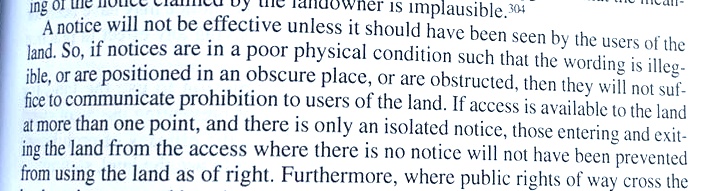
That’s really important: ‘A notice will not be effective unless it should have been seen by the users of the land… If access is available to the land at more than one point, and there is only an isolated notice [Ed: or two!], those entering and exiting the land from the access where there is no notice will not have been prevented from using the land as of right.’
Nobody ever suggested to the householders with back gates onto the field that they couldn’t use them. So their use was ‘as of right’. There was never any sign at multiple other popular access points to the field – including Cheyne Road and the arboretum side of the main entrance. The signs were put in locations where school and club users were likely to see them, but not informal users. And a significant number didn’t see them – so their use was as of right.
That’s the key issue for today’s meeting. The only issue that matters.


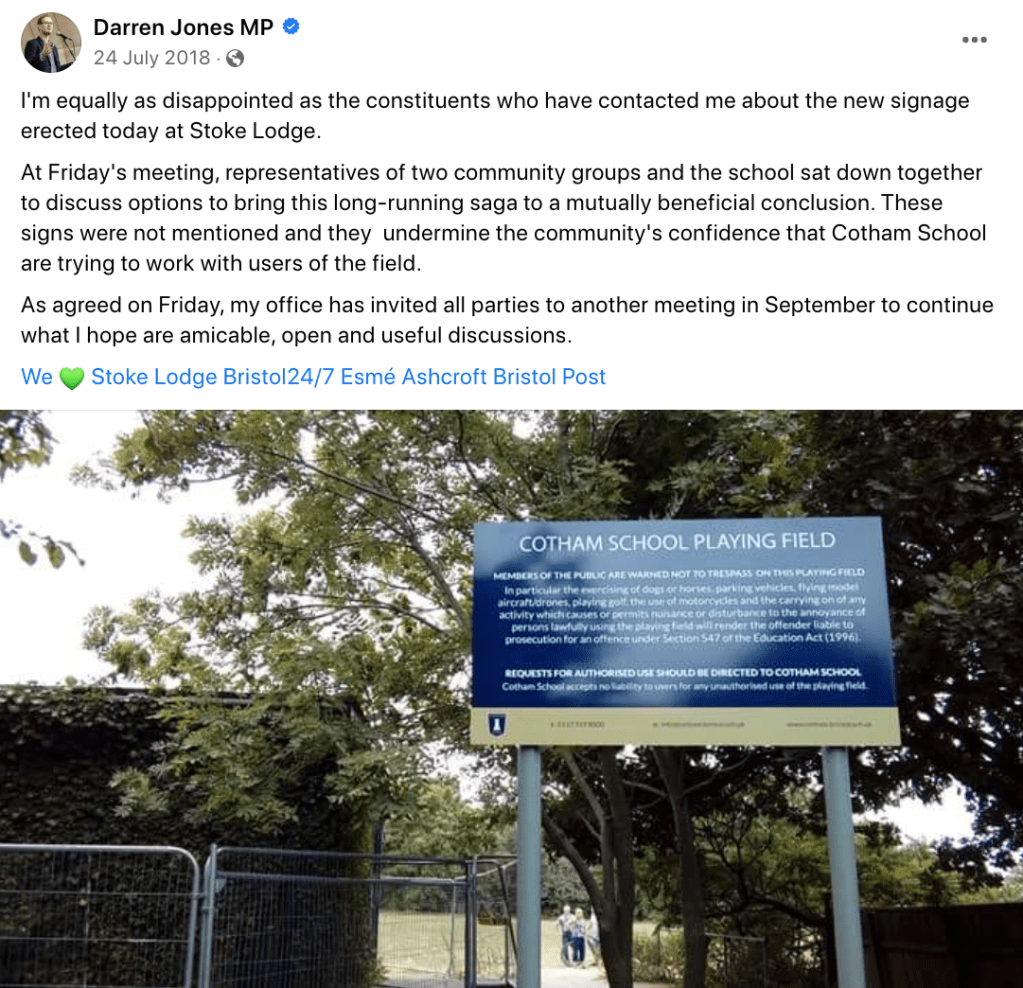


 We need to talk about Stoke Lodge